Insights
The Seven Pillars of a “Good” Surgical Video
Date
Author
Dr. Hema Anukula
Not all OR footage delivers on its promise. At Nuevata, we asked surgeons, residents, and med students what makes a surgical video truly educational.
They distilled it down to seven attributes:
Pillar | Why It Matters |
|---|---|
1. Intelligible | Voice-over narration, clear labels, logical structure |
2. Concise | Edited to highlight novel or critical steps (not full cases) |
3. Clear | High-resolution image, steady frame, proper lighting |
4. Interactive | Embedded quizzes/review breaks to boost retention |
5. Reliable | Peer-reviewed, cited references, evidence-based |
6. Accessible | Well-organized library, free or institution-wide access |
7. Suitable | Tailored to the learner’s proficiency and objectives |
1. Intelligible
Narration explains “why” behind each move
Visual aids (arrows, overlays) highlight anatomy and pitfalls
Structured flow frames learning objectives and take-home messages
2. Concise
Surgical cases can run hours—your video shouldn’t
Edit-out repetitive tissue handling and downtime
Segment into short clips so you can “choose your own adventure”
3. Clear
1080p or 4K resolution—no blurry close-ups
Steady footage (gimbals or head-mounts) and optimal OR lighting
4. Interactive
Pause for a quiz: “Which structure is that?”
Review breaks recap critical anatomy before moving on
5. Reliable
“Is this technique backed by data?”
Reference scientific literature, include peer-review logos
6. Accessible
Searchable, free, and linked directly into e-textbooks and curricula
Single sign-on for hospital or medical school networks
7. Suitable
A first-year med student wants a broad orientation; a senior resident seeks technique nuances
Tailor content depth and terminology to your audience
Nail these seven pillars in your next OR video, and you’ll create a resource learners return to—again and again.
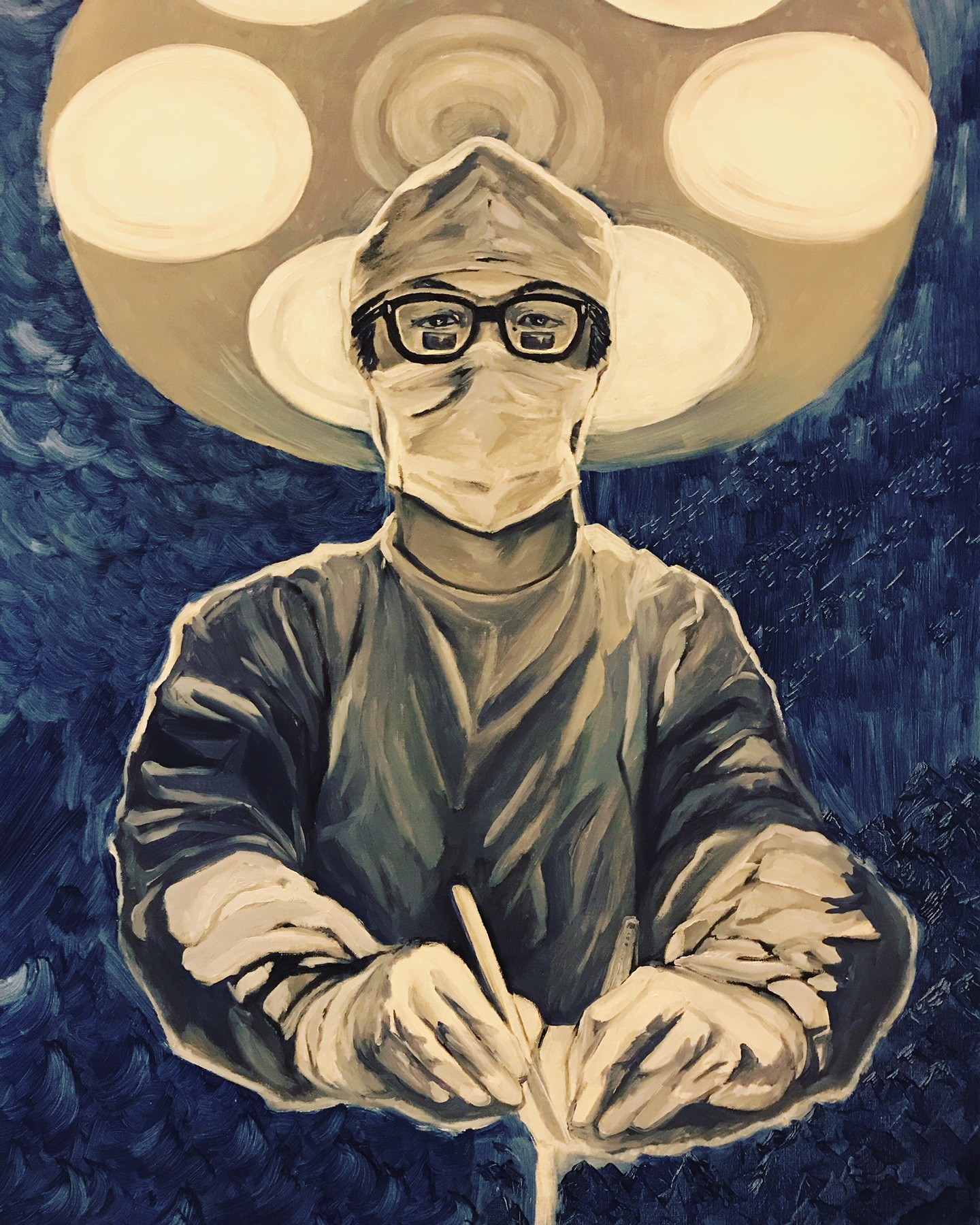
Image credit: Dr. Randolph H.L. Wong - Painting of a surgeon in action