Insights
What 1,500 Operating Rooms Taught Us About Surgical Headlights
Date
Author
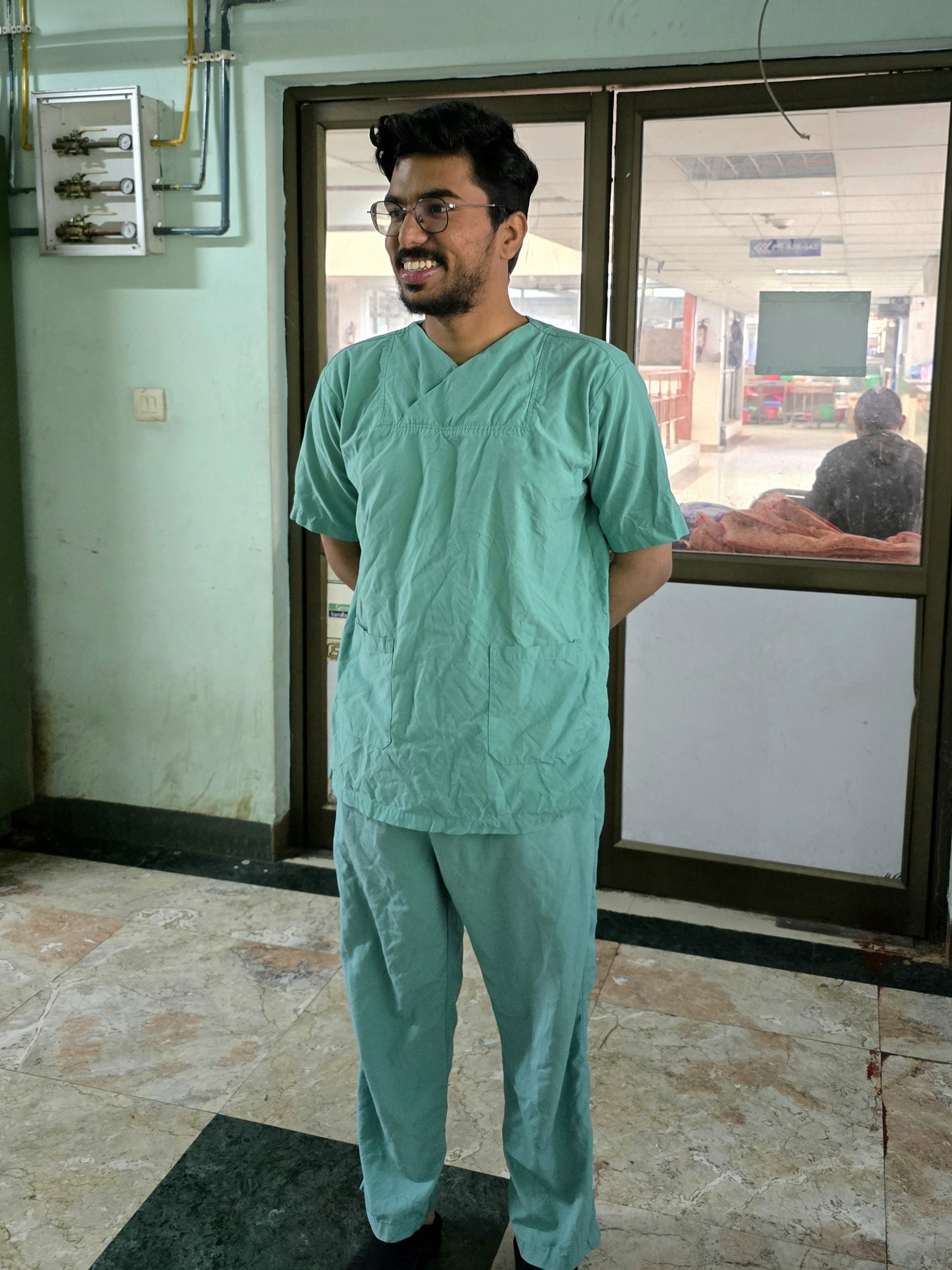
Prashanth Ray
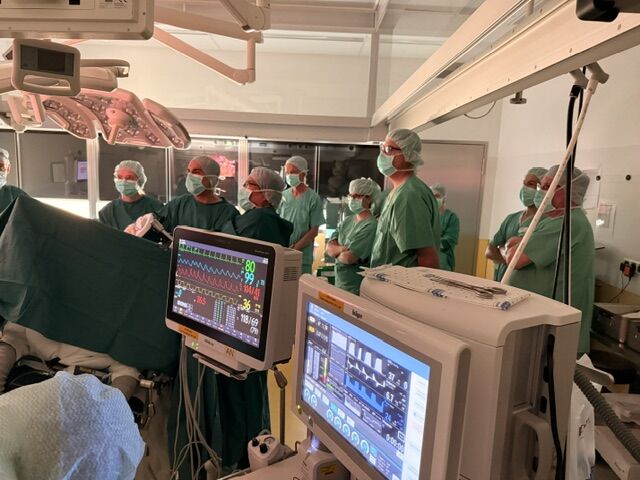
I have spent the better part of seven years walking into operating rooms, mostly in India, sometimes elsewhere. By a count I have stopped updating, the cumulative figure is somewhere north of 500 hospitals and 1,500 individual surgeon interactions. I have been in the small private hospitals in a Tier-3 town where the OT light is a refurbished 1990s halogen, and I have been in the showcase suite of a chain hospital with a 4K endoscopic stack that the senior surgeons mostly do not use. I want to write down what I learned about surgical headlights from that period, because it is more counterintuitive than I expected, and it has shaped the way we are building Iris.
There is a folk theory among consumer-tech people that the OR headlight is a "solved problem." The light goes on the surgeon's head, the surgeon sees what they are doing, end of story. The thing this folk theory misses is that the surgical headlight is, functionally, three separate problems that have been bundled together by historical accident, and the bundle is held together by very weak engineering.
The first problem is illumination. The surgeon needs a focused, high-CRI, near-shadowless light on the operative field at distances of 30–60 cm. This is a real optics problem, and the existing solutions fibre-optic headlights, LED arrays solve it adequately for most procedures, badly for some (the deep oral cavity, the pelvic floor) and inconveniently for all.
The second problem is the umbilical. Most professional surgical headlights are tethered. The fibre optic cable runs to a Xenon or LED source on a stand. The surgeon's head is leashed. Watch a surgeon perform a thyroidectomy with a tethered headlight and you will notice, after a while, that they are moving in a slightly constrained dance not because the procedure requires it but because the cable does. The wireless headlights that exist are battery-heavy, hot, and uncomfortable for the four-to-six-hour procedures they are most needed for.
The third problem and this is the one almost nobody talks about is that the headlight is the natural mounting point for everything else the surgeon needs near their forehead. Magnification loupes. A recording camera, if there is one. Microphone for verbal logging. Display, if there is one. In every OR I have been in where a surgeon has tried to record video, they have done so with a GoPro velcroed to a headband, separate light strapped on, no integration, no calibration, batteries dying mid-procedure, footage that is wide-angle, shaky, and over-saturated red because the camera was never designed to see what the surgeon sees..
The interesting moment in this research was when I stopped trying to ask surgeons what they wanted in a headlight and started asking them what they tolerated. Almost every surgeon I spoke to had complaints about their current setup. Almost none of them had ever filed a feature request. They had simply adapted around it.
The senior surgeon in Hyderabad who has performed three thousand thyroidectomies told me his neck hurts at the end of every long day, and that he uses a different brand of loupes on Tuesdays because the Monday brand makes his temples sweat, and that he stopped using the recording camera on his headlight because the cable kept catching on his assistant's gown. None of this is in the marketing materials of any headlight manufacturer.
The pattern in those conversations was consistent: surgeons would describe a chronic discomfort or workflow friction, then in the same breath dismiss it as "just part of the job." This is the same psychology, I think, that runs through surgical practice generally, the high tolerance for personal inconvenience that comes with the training. It produces extraordinary clinicians. It also produces a curiously low pressure on the equipment supply chain. Tools that would not survive a week in consumer electronics: wired, hot, heavy, poorly integrated, persist for decades in surgery because the people using them have been trained to accept worse.
The gap is not at the high end, where every research team has plenty of opinions about the next imaging modality. The gap is at the baseline.
The basic act of putting a light and a camera on a surgeon's head, comfortable enough to wear for six hours, designed for the specific lighting and motion characteristics of an open OR, integrated rather than bolted together. That product, in 2026, does not exist as a commercial offering. The closest analogues are either consumer-grade (GoPros, Insta360s, smart glasses repurposed by surgeons themselves) or research lab one-offs (the Tobii Pro, the various smart-glasses prototypes that get demoed at MICCAI and then go back into a drawer).
This is the gap Iris is designed to occupy. The specifications matter less, at this stage, than the design principle that produced them which is that the device has to be designed for the surgeon who has stopped complaining.
The headgear weight target (~200g) was not chosen because it is achievable. It was chosen because the senior thyroid surgeon in Hyderabad will not wear anything heavier for four hours, and we have asked him. The hot-swappable 6–8 hour battery was not chosen as a spec-sheet number. It was chosen because surgical cases do not stop at 90 minutes, and a device that needs a tether to charge is not a device that survives the procedure.
The dual 4K cameras, the gimbal stabilisation, the bone conduction audio, the voice-controlled UI each of these is the answer to a specific complaint that surgeons have collectively stopped making but that we heard, sometimes obliquely, sometimes only at the third or fourth meeting, when the surgeon trusted that we were actually going to do something about it.
The temptation, in this category, is to build the most technically impressive device possible. Higher resolution. More sensors. More AI on the device. This is the consumer-electronics impulse, and it is the wrong one for surgery.
What surgeons need, in the order they actually need it, is: light that works at the depth they are operating at; a device that does not hurt to wear; a camera that captures what they actually see, without distortion or red oversaturation; reliable streaming for the teaching cases; and, fifth, a workflow integration that does not add cognitive load to a procedure that already has plenty of it.
Iris is built to do exactly this set of things, in this order. Everything else the AI analytics, the real-time guidance, the cross-procedure benchmarking is downstream of the surgeon being willing to wear the device for the full case.
That, more than any single specification, is what the 1,500 operating rooms taught us.